Lost in Translation (Again): What Happens to K-Pop Songs Before They Hit Your Local Radio Station
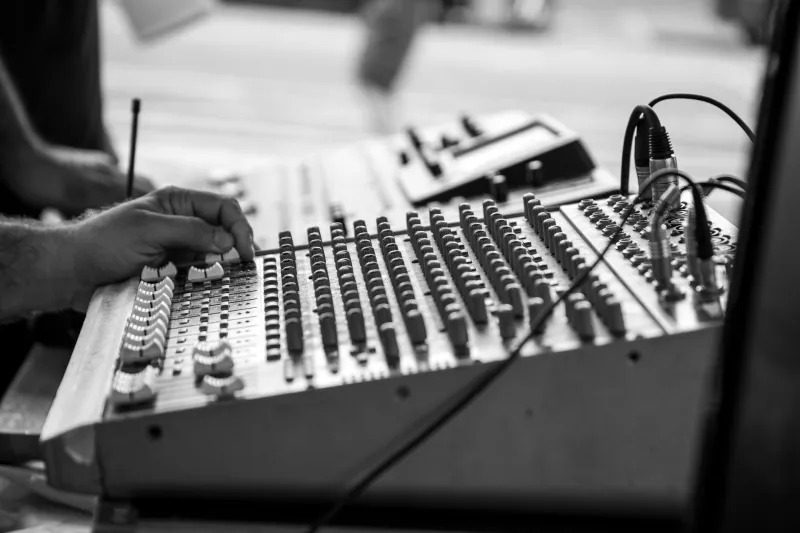
You're driving to work, half-awake, coffee in hand, and suddenly a familiar beat drops through your car speakers. It's a K-pop song — one you've had on repeat for weeks. But something feels... off. The chorus hits a little differently. That iconic Korean hook you've been belting in the shower? Gone. Replaced by an English filler line, or just smoothed over entirely.
Welcome to the quiet, largely unspoken world of K-pop radio edits.
The Invisible Hand of American Radio
American radio has always had its own rules. Songs get chopped for time, lyrics get cleaned up for FCC compliance, and BPMs occasionally get nudged to fit a station's flow. None of that is new. What is new — and increasingly frustrating to a growing fanbase — is how those same editorial decisions are being applied to K-pop tracks in ways that go way beyond a simple clean edit.
Multiple fans in online communities have flagged the phenomenon over the past couple of years, particularly as K-pop has pushed further into mainstream American airplay. Posts on Reddit's r/kpop and various fan Twitter threads have documented side-by-side comparisons of album versions versus what airs on Top 40 stations in cities like Los Angeles, New York, and Chicago. The differences aren't always subtle.
"I heard a version of a TWICE song on the radio and genuinely thought it was a cover at first," said one listener from Atlanta who asked to remain anonymous. "The Korean parts had been swapped out for these generic English phrases that didn't even match the vibe of the original. It felt like someone had taken a painting and painted over half of it."
Why Stations Make the Changes
To be fair to radio programmers, they're working within a system that was built long before the Korean Wave was even a concept in American pop culture. The logic — however outdated — goes something like this: mainstream American audiences respond better to English-language content, especially on drive-time slots where passive listening is the norm.
One radio producer who works at a major Top 40 affiliate in the Midwest (and asked not to be named because they weren't authorized to speak publicly) explained the calculus pretty bluntly. "Our program director tracks listener retention data obsessively. The moment something unfamiliar hits — a language switch, an unusual production texture — you see drop-off. It's not a value judgment on the music. It's just numbers."
That data-driven mindset leads to what the industry sometimes calls "market-ready edits" — versions of songs prepared specifically for American broadcast. In some cases, labels actually facilitate this process, providing pre-edited versions to radio stations as part of a US promotional push. In others, stations do their own thing with minimal oversight.
The result is a patchwork of versions floating around the American airwaves, some sanctioned by the original artists, some decidedly not.
What Gets Cut — and What Gets Lost
The most common alteration is the removal or replacement of Korean-language verses or hooks. English-language bridges tend to get extended to fill the gap. Sometimes a rap verse in Korean gets dropped entirely, which can fundamentally change the structure and emotional arc of a song.
Production tweaks are subtler but just as real. Bass frequencies get dialed back for stations with older speaker infrastructure. Dynamic range — that satisfying push-and-pull between quiet and loud that's a hallmark of a lot of K-pop production — sometimes gets compressed into a flatter, more uniform sound. The "loudness" of K-pop, which producers in Seoul have spent years perfecting, can end up sounding like every other song in the rotation.
"Korean pop production is incredibly intentional," said one independent music producer based in Los Angeles who has worked on projects bridging the US and Korean markets. "There are layers in those mixes that are meant to reward close listening. When you compress all of that for radio, you lose the thing that makes it special. You're basically handing someone a gourmet meal and microwaving it first."
Artists Caught in the Middle
For K-pop acts actively trying to crack the American market, this creates a genuinely awkward situation. On one hand, radio play is still one of the most powerful tools for mainstream exposure in the US. Getting spins on a major Top 40 station can move the needle in ways that streaming alone can't always replicate, particularly for breaking into older demographics.
On the other hand, the version of your song that millions of Americans hear on the radio might bear only a passing resemblance to the artistic vision you put out. For groups whose identity is deeply tied to the bilingual or fully Korean nature of their music, that's not a trivial compromise.
Some acts have leaned into it. English-language versions or remixes released specifically for Western markets have become a standard part of major K-pop rollouts. Others have pushed back — quietly or otherwise — on edits they didn't approve.
The tension is real, and it's not going away anytime soon.
Fans Are Paying Attention
Here's the thing about K-pop fans: they are, as a group, among the most attentive and detail-oriented music listeners on the planet. These are people who notice a one-second instrumental difference between a physical album version and a streaming master. They are absolutely going to notice when a radio edit swaps out a Korean verse.
And increasingly, they're making noise about it.
Fan accounts dedicated to specific groups have started compiling "radio edit trackers" — informal databases logging which stations are playing which versions of which songs. Some fans have taken to calling radio stations directly or tagging them on social media to ask why alterations were made. It's a level of consumer engagement that most radio programmers probably weren't expecting from a demographic they may have assumed was too niche to matter.
"We're not niche anymore," said Jamie, a 24-year-old K-pop fan from Houston who runs a fan account with tens of thousands of followers. "K-pop is in the Top 40. It's on the Grammys stage. You can't treat it like some foreign novelty that needs to be translated for American ears. We're American ears, and we want the real version."
So What's the Fix?
There's no clean answer here, and honestly, the situation is probably going to get messier before it gets better. As more K-pop acts push for mainstream US success, the friction between artistic integrity and radio-market demands is going to keep surfacing.
Some in the industry point to the streaming era as a natural corrective — if the authentic version is always one tap away on Spotify or Apple Music, does it really matter what the radio edit sounds like? Maybe. But radio still shapes culture in ways streaming hasn't fully replaced, especially in cars, workplaces, and public spaces where people encounter music passively.
What fans and artists both seem to want, more than anything, is transparency. Know what you're listening to. Know when something's been altered. And maybe — just maybe — trust that American audiences in 2024 are ready to hear a Korean chorus without needing it smoothed over.
The Korean Wave didn't get this far by playing it safe. It probably shouldn't start now.