Sealed, Stacked, and Slightly Broke: Inside America's K-Pop Album Collecting Addiction
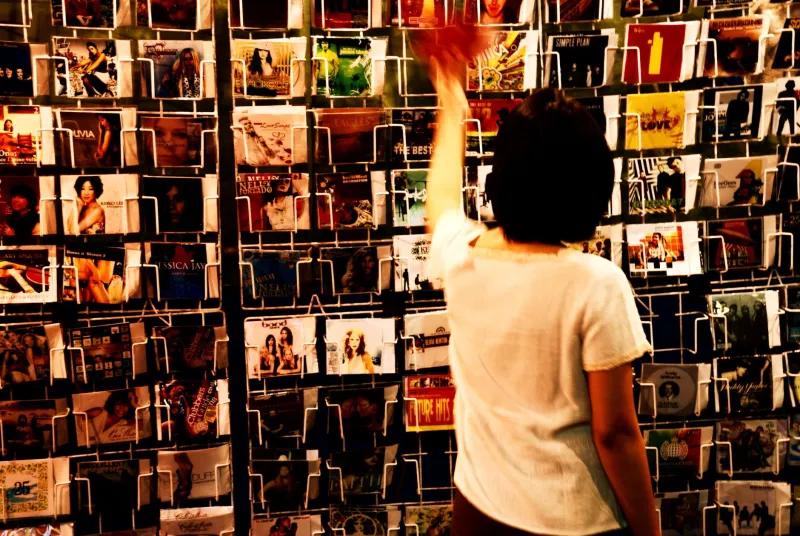
Sarah, a 24-year-old graphic designer from Austin, Texas, has a shelf dedicated entirely to albums she has never listened to. Not because she doesn't love the music — she absolutely does — but because cracking open the plastic wrap on a sealed copy feels, in her words, "like a crime against the universe." She owns six versions of the same release. She is not alone.
Across the United States, K-pop album collecting has quietly evolved into one of the most obsessive — and expensive — fan rituals in modern pop culture. What started as a niche import hobby has ballooned into a full-blown economy, complete with resale markets, grading communities, and a very real tension between loving an artist and wondering how much of your rent money you just spent on a lenticular photobook.
More Than Just Music: The Album as an Object
If you've never held a K-pop album, the experience is genuinely unlike anything in Western pop. These aren't your standard jewel cases. We're talking hardcover photobooks, hand-written lyric inserts, folded poster sets, sticker sheets, and — the crown jewel of the whole operation — the photocard. A small, trading-card-sized photo of one member of the group, randomly inserted into each copy. You don't know which one you're getting until you open it.
That randomness is, by design, absolutely maddening.
"It's basically a blind box," says Marcus, a 29-year-old teacher from Chicago who estimates he's spent close to $800 on a single group's discography over the past two years. "And once you pull the one card you actually wanted, it feels like winning the lottery. But if you don't? You're already thinking about buying another copy."
Labels like HYBE, SM Entertainment, and JYP have mastered the art of the multi-version drop — releasing the same album in anywhere from two to eight different physical versions, each with unique covers, exclusive inclusions, and yes, different photocard pools. Buying all versions isn't just encouraged; for fans who want a complete set, it's practically mandatory.
The FOMO Factory
The genius — and, depending on your perspective, the manipulation — of this model is how effectively it weaponizes fan loyalty. Limited-edition versions tied to specific retailers. Weverse shop exclusives. Pre-order bonuses that expire in 48 hours. Every launch is engineered to make hesitation feel like a loss.
"There's always a version I feel like I'm missing," admits Priya, a college student from New Jersey who tracks her collection on a spreadsheet. "And the labels know that. They drop a 'standard' version, then a 'platform' version, then a 'fan club' version. By the time you've bought three, you might as well get the fourth."
This FOMO-driven purchasing model has proven wildly effective in the US market, where physical album sales for K-pop acts have surged dramatically even as overall physical music consumption continues to decline. According to Luminate data, K-pop titles consistently rank among the top-selling physical albums in the country — not because fans are spinning vinyl, but because they're collecting.
The Resale Game
Not every purchase is about keeping. A thriving secondary market has sprung up on platforms like Mercari, eBay, and dedicated K-pop trading apps, where individual photocards can fetch anywhere from a few dollars to several hundred, depending on the member and the rarity. "PC only" listings — meaning sellers extracted the photocard and are selling the rest of the album separately — are commonplace.
For some collectors, this is a genuine side hustle. "I buy in bulk, keep the cards I want, and resell the rest," explains Jordan, a 22-year-old from Seattle. "I've basically funded my collection by flipping duplicates. It's not profit exactly, but it offsets the cost." Others treat their rarest cards like investments, storing them in protective sleeves and tracking market prices the way someone else might watch stocks.
The secondary market has also created its own culture of authentication anxiety. Counterfeit photocards — convincing fakes printed and sold as originals — have become a real problem, pushing collectors toward community-run verification channels on Discord and Reddit where members help each other spot fakes.
A Closet Full of Consequences
Here's where things get a little uncomfortable: the sheer volume of physical product being manufactured and, in many cases, never actually used is starting to draw criticism — including from fans themselves.
Each K-pop album version requires its own print run, its own packaging, its own shipping materials. When a major group drops a comeback with five physical versions and sells millions of copies globally, the environmental footprint is significant. Stacks of sealed albums that sit permanently on shelves, or worse, get discarded after the photocards are extracted, represent a lot of plastic, paper, and carbon emissions for what is essentially a collectible trading card delivery system with a CD inside.
"I've thought about it," Sarah admits. "Like, I have albums I bought just to pull the photocard and I don't know what to do with the rest of it. It feels wasteful. But I also can't stop." She laughs, but there's a genuine unease in it.
Some fans have started advocating for more sustainable packaging alternatives, and a handful of smaller labels have experimented with digital photocard systems — though reception has been mixed. For many collectors, the physical object is the entire point. A digital card doesn't have the same weight, literally or emotionally.
The Psychology of the Pull
So why do people keep buying? Psychologists who study collector behavior point to a few converging forces: the dopamine hit of the unboxing reveal, the social bonding that comes from trading within a fan community, and the very human desire to feel close to something — or someone — you admire. Owning a photocard of your favorite member feels, irrationally but genuinely, like a small personal connection.
"It's not that different from collecting baseball cards or Funko Pops," says Marcus. "Except the community is bigger, the content drops faster, and your favorite group might have twelve members, so there are twelve times as many cards you feel like you need."
For American fans especially, the collecting ritual also functions as a form of cultural participation — a way to be part of something global while holding something tangible in your hands. In a fandom that often lives primarily online, the physical album is one of the few ways the experience becomes real and material.
What Labels Know That You Might Not Want to Admit
None of this happens by accident. The multi-version model, the random inclusions, the timed exclusives — these are deliberate design choices made by labels that understand their audience extremely well. Whether you view that as savvy marketing or cynical exploitation probably depends on how much you spent last comeback cycle.
What's undeniable is that it works. And for most collectors, even the ones who joke about being broke or drowning in packaging, the hobby brings genuine joy. The thrill of the pull, the satisfaction of a complete set, the friendships built through trading — these are real.
Sarah's sealed shelf isn't going anywhere. Neither is her next pre-order.