From Idol Glow to Drugstore Shelves: How K-Pop Is Turning American Teens Into Skincare Obsessives
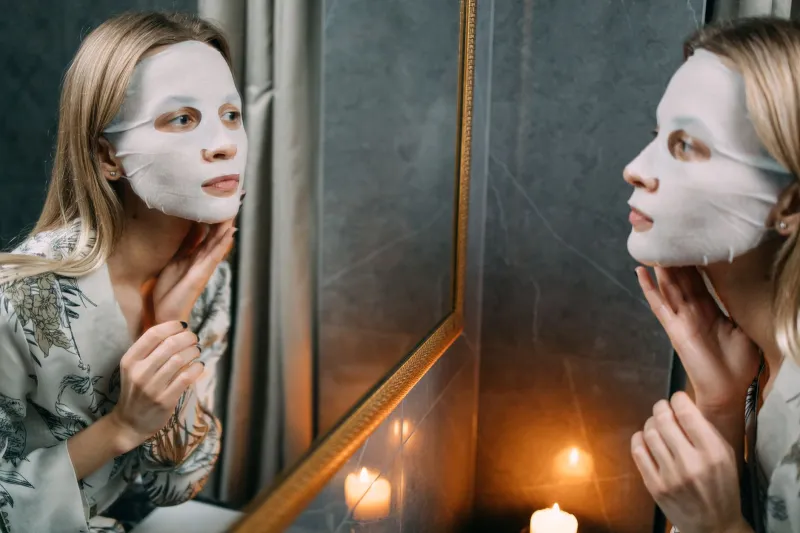
If you've spent any time on skincare TikTok lately, you've probably seen it: a teenager standing in front of a ring light, holding up a bottle of COSRX snail mucin serum like it's a sacred artifact. The caption reads something like "my bias has this glow and I WILL have it too." Welcome to the K-beauty pipeline — the very real, very lucrative phenomenon where K-pop fandom ends and a 10-step skincare routine begins.
It's not exactly a secret that Korean idols look... unreasonably good. The kind of dewy, pore-minimized, lit-from-within complexion that makes you question everything you know about moisturizer. For years, American fans watched their favorite idols up close during livestreams and fancams, and the question stopped being "why do they sound so good" and became "what are they putting on their faces."
The Fancam-to-Face Mask Moment
For a lot of American K-pop fans, the entry point into K-beauty wasn't a magazine ad or a beauty blogger — it was an idol. Seventeen-year-old Maya from Austin, Texas, traces her entire skincare obsession back to a behind-the-scenes video of her favorite group prepping for a music show.
"They had these sheet masks on and everyone was laughing, and I remember thinking, okay, I need whatever that is," she told iBuzz Korea. "I went down a rabbit hole that night and came out the other side with a 12-item cart on YesStyle."
Maya isn't alone. Google Trends data has consistently shown spikes in searches for terms like "glass skin routine," "Korean skincare steps," and "toner vs. essence" following major K-pop comeback seasons and award show cycles. The timing isn't a coincidence — it's a pipeline.
Beauty influencer and longtime K-pop fan Danielle Reyes, who runs the YouTube channel Seoulful Skin, says the connection between idol culture and beauty curiosity is basically built into the fandom experience now.
"When you're deep in a fandom, you're watching your faves constantly," she explained. "You notice their skin. You notice when it changes. Fans will literally analyze whether an idol's complexion improved after a hiatus and speculate about what routine they switched to. It's intense, but it's also driven a ton of people to actually take care of their skin, which isn't a bad thing."
Does the 10-Step Routine Actually Work?
Here's where things get a little more complicated. The "10-step Korean skincare routine" — oil cleanser, water cleanser, exfoliator, toner, essence, ampoule, serum, sheet mask, eye cream, moisturizer, SPF — has become something of a cultural shorthand for K-beauty itself. But dermatologists have some thoughts.
Dr. Priya Anand, a board-certified dermatologist based in Chicago, says she's seen a noticeable uptick in teen patients coming in with questions about Korean skincare products over the past few years — and her feelings are mixed.
"The good news is that K-beauty has introduced a lot of young people to the concept of sun protection and hydration, which are genuinely the two most important things you can do for your skin," Dr. Anand said. "The not-so-great news is that some teens are layering six or seven active ingredients without understanding how they interact, and I'm seeing more irritation and breakouts as a result."
Her recommendation? Start simple. A gentle cleanser, a fragrance-free moisturizer, and SPF 30 or higher will do more for most teenagers than a 10-product stack. "The 10-step routine is a ceiling, not a floor," she added. "You don't need to be doing all of it."
Still, she acknowledged that the K-beauty boom has had genuinely positive effects on how young Americans approach skincare. "A 16-year-old who's excited about wearing sunscreen because their favorite idol mentioned it? That's a win."
Brands Are Absolutely Paying Attention
The beauty industry has noticed the K-pop pipeline, and it is leaning in hard. Korean brands like COSRX, Laneige, Innisfree, and Sulwhasoo have seen their US sales climb steadily over the past half-decade, with some products going viral almost entirely through fan-driven content rather than traditional advertising.
Laneige's Lip Sleeping Mask became a full-on American phenomenon after multiple idols were spotted using it — and after a certain high-profile celebrity co-sign that sent it flying off Target shelves. COSRX's snail mucin essence has racked up hundreds of millions of views across TikTok and YouTube, driven largely by skincare content creators who discovered it through the K-beauty rabbit hole.
And Western brands aren't standing on the sidelines either. Companies like CeraVe and The Ordinary have quietly repositioned some of their marketing language to align with K-beauty values — emphasizing barrier repair, hydration layering, and "glass skin" results. It's cultural cross-pollination in real time.
Reyes, the beauty influencer, points out that the pipeline also flows in interesting directions. "You've got K-pop fans who got into K-beauty, and now they're pulling their non-fan friends into it too. The audience has grown way beyond just stans at this point."
The Authenticity Question
Not everyone is entirely comfortable with how the K-beauty trend has evolved in the American market. Some Korean American beauty writers have raised concerns about the way Korean skincare gets flattened into a trendy aesthetic — stripped of its cultural context and repackaged for Western consumption.
There's also the idol-reality gap to consider. K-pop idols have access to professional makeup artists, high-end skincare, regular dermatologist treatments, and yes, in some cases, cosmetic procedures. The idea that any teenager can achieve that look with a $12 essence from Amazon is, at best, optimistic.
Maya, our skincare-obsessed teen from Austin, gets it. "I know they have a whole team," she laughed. "I'm not delusional. But my skin genuinely got better after I started paying attention to it, so I don't really care where the inspiration came from."
That might be the most honest summary of the whole phenomenon. The K-pop-to-K-beauty pipeline is driven by aspiration, sure — but it's also pushing a generation of American teens to actually think about sunscreen, hydration, and gentle cleansing in a way that previous generations just... didn't.
The Glow-Up Is Real (Sort Of)
At the end of the day, the K-beauty explosion in the US is a story about more than just skincare products. It's about how deeply K-pop culture has embedded itself into everyday American life — moving beyond music and into the bathroom cabinet, the morning routine, the after-school Target run.
Whether or not any of us will ever achieve the glass-skin perfection of our favorite idols is honestly beside the point. The obsession is driving conversations about skin health, self-care, and Korean culture that simply weren't happening a decade ago.
And if a sheet mask or two makes a fan feel a little closer to their bias? Honestly, that's kind of sweet.
Just maybe patch-test the snail mucin first.