Leaving Everything Behind for Seoul: The American Dreamers Chasing K-Pop Stardom
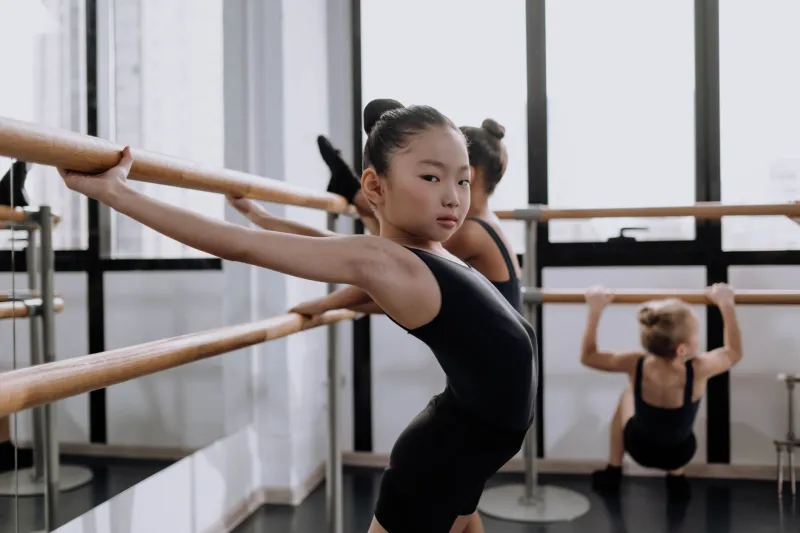
Imagine telling your parents at 16 that you're moving to South Korea to become a pop star. No guaranteed contract. No promise of a debut. Just a trainee ID badge, a shared dorm room with five other hopefuls, and a daily schedule that starts before sunrise. For a surprising number of American kids, that's not a nightmare — it's the plan.
The pipeline from the US to Seoul's major entertainment companies has quietly been growing for years, and it's picking up serious speed. SM Entertainment, JYP Entertainment, and HYBE all hold global auditions, actively scouting talent in cities like Los Angeles, New York, and Chicago. And American applicants? They're showing up in droves.
How the Audition Process Actually Works
For most American hopefuls, the journey starts online. All three of the big Korean agencies — often called the "Big Three" by fans — accept video submissions through their websites year-round. Applicants submit clips of themselves singing, dancing, or rapping, and if they catch a recruiter's eye, they're invited to in-person auditions held periodically in major US cities.
JYP, for instance, held its "Blind Audition" tour across the US as recently as 2023, drawing thousands of applicants in Los Angeles alone. HYBE's global subsidiary, which oversees acts like BTS and Tomorrow X Together, launched a dedicated global audition program that has specifically targeted English-speaking markets. The message from these companies is clear: international talent is not just welcome — it's being actively recruited.
But getting a callback is just step one. The real challenge begins when the plane lands at Incheon International Airport.
Culture Shock Is an Understatement
Trainees who make the cut and relocate to Seoul quickly discover that the hardest part of the journey isn't the dancing or the vocal training — it's the culture. Korean entertainment companies operate on a system that is, by most American standards, incredibly demanding and hierarchical. Respect for seniors, strict house rules, and near-constant evaluation are just part of the deal.
For many American trainees, the language barrier alone is enough to derail early momentum. Korean is notoriously difficult for native English speakers — it's consistently ranked among the hardest languages to learn by the Foreign Service Institute. While agencies do provide language tutoring, the pace of daily life inside a training program means you're expected to pick things up fast. Rehearsals are conducted in Korean. Feedback from coaches is in Korean. Even casual conversation with fellow trainees can feel isolating at first.
There's also the food, the homesickness, the time difference from family back home, and the psychological weight of knowing that at any given evaluation, you could be cut from the program entirely. Unlike a college audition or a traditional music deal, trainee status is not a contract — it's a trial. Some trainees spend two or three years in Seoul and never debut.
The Ones Who Made It Through
Still, the success stories are real, and they've inspired a whole new generation of American dreamers. EXO's Chanyeol and f(x)'s Victoria were early examples of non-Korean talent making it under major labels, but the more recent wave tells an even more international story. Aespa's Karina and Winter are Korean, but the group's concept was built around a global, multicultural identity — a deliberate choice by SM. BLACKPINK's Rosé grew up in Australia. GOT7's Mark and Jackson both came from outside Korea. And TWICE has members from Japan and Taiwan who navigated the same cultural gauntlet American trainees face today.
Now, newer acts are pushing that boundary even further. Groups like KATSEYE — a girl group developed through HYBE's partnership with Geffen Records — were specifically designed to feature Western members trained in the K-pop system. The group includes members from the US and Europe, and their debut was marketed directly at English-speaking Gen Z fans. It's a sign that the industry isn't just tolerating international trainees anymore; it's building business models around them.
Is It Worth It? Trainees Speak Out
That's the question everyone wants answered, and the honest truth is: it depends on who you ask.
Some former trainees who didn't debut have spoken openly on social media and YouTube about the experience — not always positively. Long hours, emotional burnout, and the financial strain of living abroad without income are real concerns. Trainee life isn't glamorous. You're not getting paid. You're being evaluated constantly. And the competition isn't just from other Americans — you're up against incredibly talented Korean, Japanese, Chinese, and Southeast Asian applicants who may have been training since they were in elementary school.
But others describe the experience as transformative, even life-changing, regardless of whether they ever stood on a stage under a spotlight. The discipline, the language skills, the friendships, and the sheer confidence that comes from surviving such a rigorous environment? That's not nothing. Several former trainees have parlayed their Seoul experience into careers as choreographers, vocal coaches, content creators, or indie artists back in the States.
What the Industry Is Actually Signaling
Here's the bigger picture worth paying attention to: the K-pop industry is not globalizing by accident. Korean agencies have watched BTS sell out stadiums in New Jersey and BLACKPINK headline Coachella. They know where the money is. The deliberate recruitment of English-speaking trainees is, at least in part, a market strategy — a way to build authentic connections with Western audiences through artists who literally speak their language.
That's not cynical, necessarily. It just means that American trainees who do break through aren't just chasing a personal dream — they're also filling a very specific industry need. And that might actually improve their odds more than any amount of natural talent alone.
For the kids back home still filming their audition tapes in their bedrooms in Atlanta or Phoenix or Portland, that's probably the most realistic and hopeful thing anyone can tell them: the industry needs you, but it's going to make you work for it harder than you've ever worked for anything.
And honestly? If the K-pop world has taught us anything, it's that the grind is kind of the whole point.