Bias, Comeback, Stan: How K-Pop Rewrote the American Internet's Dictionary
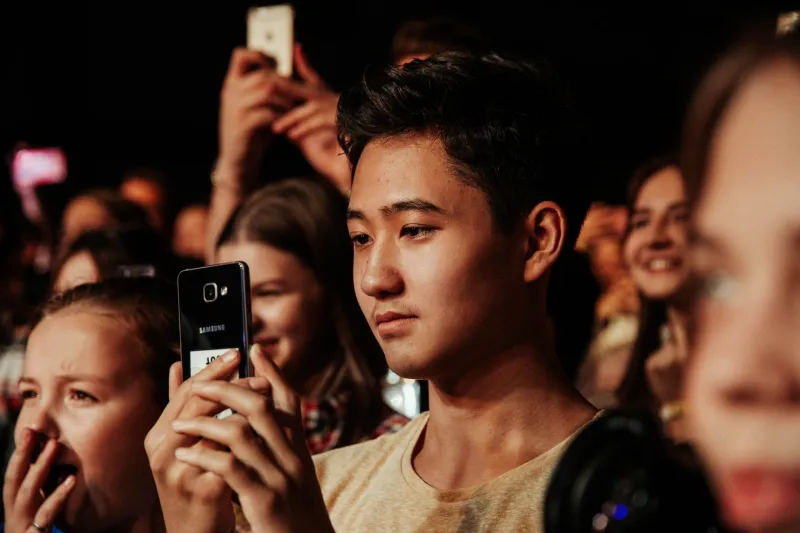
If you've spent any time on social media in the last five years, you've probably seen it happen. Someone posts a video of a slick choreography performance, and within seconds the comments are flooded with phrases like 'he's literally my bias wrecker,' 'this comeback SLAPS,' or 'I didn't choose this fandom, it chose me.' And if you had absolutely no idea what any of that meant — well, welcome to the K-pop linguistic universe.
What started as insider shorthand among dedicated Korean pop music fans has quietly but unmistakably seeped into mainstream American internet culture. These aren't niche forum terms anymore. They're showing up in tweets about sports teams, Instagram captions from people who've never heard a single BTS track, and even — brace yourself — in brand marketing copy. K-pop fandom vocabulary has gone fully mainstream, and the speed at which it happened is genuinely fascinating.
So Where Did All These Words Even Come From?
To understand how K-pop terminology conquered English-speaking spaces, you have to understand how tightly organized K-pop fandoms are in the first place. Unlike Western pop fandoms, which tend to be more loosely structured, K-pop fan communities operate with a kind of internal infrastructure. There are dedicated fan sites, streaming teams, voting squads, and yes — a shared vocabulary that helps everyone communicate quickly and efficiently.
Take the word 'bias.' In K-pop, your bias is your favorite member of a group — the one you're most devoted to. It's a simple concept, but the word itself carries a lot of emotional weight. Then there's the 'bias wrecker,' which refers to a member who isn't your bias but keeps threatening to become one through sheer charisma or talent. These terms gave fans a precise, playful way to talk about something that previously required a lot of explaining.
'Comeback' is another big one. In the American music industry, a comeback typically implies an artist returning after a period of irrelevance. In K-pop? It just means a new release. Any new release. A group can have three comebacks in a single year, and each one is treated like a major event. American fans adopted this usage almost immediately, and now you'll see it used casually on stan Twitter to describe any artist dropping new music — K-pop connection or not.
TikTok and Twitter: The Accelerators
No conversation about this linguistic shift is complete without talking about platforms. TikTok and Twitter (now X, though most fans still just call it Twitter) have been the two biggest engines driving K-pop vocabulary into the broader American lexicon.
Twitter, in particular, has long been the heartbeat of K-pop fandom activity in the US. Streaming parties, chart-tracking threads, fan-cam shares — all of it happens in real time, and the language travels with it. When a term gets used in thousands of tweets per hour, it starts appearing in people's timelines whether they're K-pop fans or not. Exposure breeds familiarity, and familiarity breeds adoption.
TikTok accelerated things even further by collapsing the barrier between fan communities and general pop culture audiences. A video explaining what a 'fandom name' is — ARMY for BTS fans, BLINK for BLACKPINK fans, Swifties for... well, you know — can rack up millions of views from people who are just casually curious. Suddenly terms that once lived exclusively in fan forums are being explained to, and then used by, a much wider audience.
Dr. Lauren Squires, a linguist who studies internet language, has noted in academic circles that fan communities have historically been incubators for linguistic innovation. K-pop fandoms are a particularly potent example because they combine high engagement, international reach, and a strong sense of community identity — all of which are conditions that help new words spread fast.
The Words That Crossed Over Completely
Some K-pop terms have crossed over so thoroughly that many Americans using them don't even know their origins. 'Stan' is the most obvious example — though its roots are technically in Eminem's 2000 song, K-pop fandoms turbocharged its modern usage as a verb ('I stan this group') and it's now in Merriam-Webster. Similarly, 'ship' (short for relationship, used to describe two people fans want to be together) has K-pop fandom fingerprints all over its mainstream adoption, even if it predates the genre's US popularity.
Then there are terms still strongly associated with K-pop but increasingly used beyond it: 'sasaeng' (an obsessive fan who crosses personal boundaries), 'anti' (someone who actively dislikes a celebrity), and 'visual' (the member of a group considered the most conventionally attractive) are all showing up in conversations about Western artists too.
American fans we spoke with had a lot to say about this. Maya, a 24-year-old college student in Chicago who got into K-pop through BLACKPINK during the pandemic, put it simply: 'I didn't even realize I was learning a new vocabulary. It just kind of happened. And then I caught myself calling Sabrina Carpenter my bias and had to explain to my roommate what that meant for like twenty minutes.'
That experience — the accidental adoption followed by the need to explain — is pretty universal among fans who straddle K-pop and mainstream American pop culture.
Is This Just a Fad, or Is It Permanent?
Here's the thing about language: once words get embedded into everyday usage, they tend to stick around. 'Selfie' started as tech-community jargon. 'Ghosting' came from dating app culture. Neither of those is going anywhere. Linguistic experts generally agree that terms which fill a gap — words that describe something people previously had no efficient way to say — tend to survive long after their original context fades.
K-pop vocabulary fills gaps. 'Bias wrecker' describes a very specific emotional experience with remarkable efficiency. 'Fandom name' captures a sense of collective identity that 'fan base' never quite managed. These words aren't just slang for slang's sake — they're genuinely useful, and that's why they're spreading.
Of course, there's always a risk of dilution. When a term travels far enough from its original context, it can lose nuance. Some longtime K-pop fans are already a little wary of seeing their community's language go fully mainstream — there's something that gets lost when insider vocabulary becomes everyone's vocabulary.
But that tension is itself a sign of cultural impact. The fact that K-pop fandom language is widespread enough to feel diluted to its originators means it has genuinely changed how Americans communicate online. That's not a small thing.
The Bigger Picture
At the end of the day, language is a living record of what captures people's attention and imagination. The fact that Korean entertainment culture has contributed meaningfully to the American internet's vocabulary says something real about how deeply K-pop has embedded itself in US pop culture — not just as music people listen to, but as a cultural framework people think and talk within.
Next time you catch yourself saying someone 'ate that performance' or casually referring to a new album drop as a 'comeback,' maybe take a second to appreciate the journey those words made. From Korean entertainment industry shorthand, through fan forums and streaming parties, across TikTok's For You page and into your everyday vocabulary. That's quite the linguistic glow-up.