Loving Your Faves Responsibly: A Fan's Guide to K-Pop Mental Health Awareness
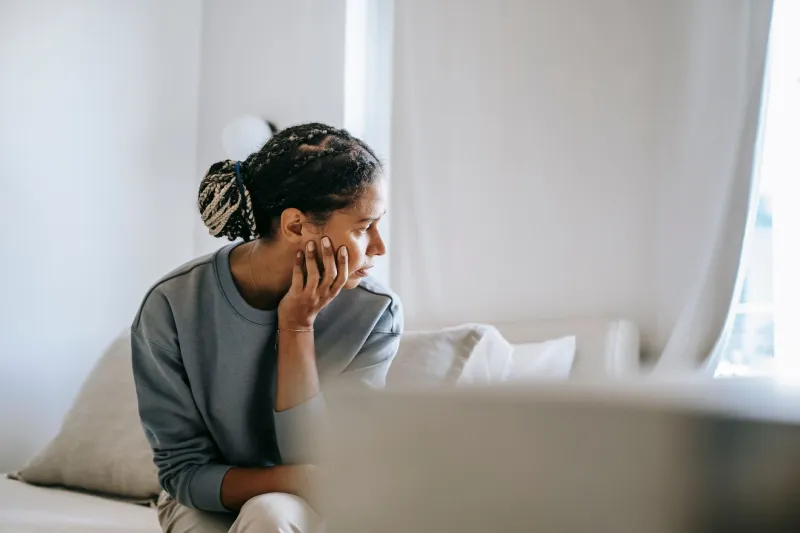
The following is an opinion piece reflecting the perspective of the iBuzz Korea editorial team.
Let's start with something that's easy to forget when you're three hours deep in a fan cam rabbit hole at 2 a.m.: the person on your screen is a human being with a nervous system, a stress response, and a limit.
K-pop is a genre built on extraordinary levels of dedication — from the artists who pour everything into their performances, and from the fans who pour everything into supporting them. That mutual intensity is part of what makes K-pop culture so electric. But it's also what makes it, at times, genuinely unsustainable for the people at the center of it.
As American fans who are often geographically removed from the K-pop industry's direct pressures, we have a unique perspective — and a unique responsibility.
What the Industry Actually Asks of Idols
To understand why idol mental health is such a serious concern, you have to understand what the K-pop system actually demands. And it's a lot.
Trainees — often recruited as young teenagers — spend years in intensive training programs before ever debuting. These programs cover singing, dancing, language skills, and media training, often at the expense of formal education and normal adolescent development. By the time an idol debuts, they've already given years of their life to a company that holds significant contractual control over their schedule, appearance, public relationships, and sometimes their social media presence.
Post-debut, the pace doesn't slow down. Comeback cycles can be relentless — multiple albums per year, each requiring months of promotional activities including music show appearances, fan sign events, variety show schedules, and international tours. Sleep deprivation is well-documented in the industry. Dietary restrictions are common. The pressure to maintain a specific physical appearance is constant and, by most Western standards, extreme.
Several high-profile idols have spoken publicly about the toll this takes. SHINee's Jonghyun, who passed away in 2017, left behind writing that described profound emotional exhaustion. More recently, artists including Stray Kids' Han, BTS's RM and Suga, and MAMAMOO's Hwasa have all spoken candidly about anxiety, depression, and burnout. These aren't isolated cases — they're windows into a systemic issue.
The Parasocial Dimension
Here's where it gets complicated for fans, particularly in the American context where parasocial relationships with celebrities are already a well-documented phenomenon.
K-pop fandoms are, by design, deeply intimate. The genre's marketing strategies — fan sign events, live streams, social media interactions, reality-style content — are built to make fans feel personally connected to idols. That's not an accident. It's a business model. And for many fans, that sense of connection is genuinely meaningful and positive.
But parasocial intimacy has a shadow side. When fans feel like they know an idol personally, they sometimes feel entitled to that idol's time, emotional availability, and personal life. This manifests in behaviors that range from mildly uncomfortable (obsessive tracking of an idol's daily movements) to genuinely dangerous (sasaeng culture, where extreme fans invade idols' private lives).
Dr. Pamela Rutledge, a media psychologist who has written extensively on parasocial relationships, notes that the intensity of K-pop fandom culture can blur the line between admiration and ownership. "When fans feel a strong parasocial bond, they can lose sight of the fact that the relationship is fundamentally one-directional," she has explained in interviews. "The celebrity doesn't know you. They're not your friend. That asymmetry matters."
For American fans specifically, it's worth noting that the cultural context around celebrity in the US already normalizes a lot of invasive behavior. The K-pop industry's intimacy-marketing strategies can amplify those tendencies in ways that feel normal within fandom culture but would read as alarming from the outside.
What "Support" Actually Looks Like
So what does responsible fandom look like in practice? A few things worth thinking about:
Stream, buy, and vote — but don't make it your personality. Supporting your faves through legitimate channels is great. Tying your emotional well-being to chart positions or award outcomes creates a kind of anxiety that isn't good for you and doesn't actually help the artists.
Respect when idols set boundaries. When an idol takes a hiatus for mental health reasons, the correct fan response is support — not pressure to return. When a group member leaves, respect their decision. These are people making choices about their own lives, and those choices deserve the same respect you'd give anyone else.
Push back on harmful fandom behavior. If you see people in your fandom community posting personal information about idols, speculating obsessively about their private relationships, or sending negative comments to artists, say something. Fandom culture is shaped by its members, and American K-pop communities have real influence.
Separate the art from the industry. You can love K-pop music and still be critical of the industry structures that produce it. Acknowledging that an idol's company has problematic practices doesn't mean you have to stop listening to the music — it means you're engaging with the full picture honestly.
Take care of yourself, too. The mental health conversation in K-pop fandoms shouldn't only be about idols. Fandom can be wonderful, but it can also become all-consuming in ways that aren't healthy. Boundaries go both directions.
A Different Kind of Celebrity Culture
It's useful to compare the K-pop system with Western celebrity culture — not to declare one better or worse, but to understand the differences.
American pop stars generally have more contractual autonomy, more control over their public image, and more cultural permission to be openly flawed, complicated people. The mythology around Western celebrity is built around authenticity and individuality. K-pop's mythology is built around perfection, dedication, and group harmony — values that are genuinely beautiful but that also create very little room for idols to be human in public.
That's changing, slowly. More idols are speaking openly about mental health. More companies are (at least publicly) investing in artist wellness programs. Regulatory conversations in South Korea about trainee protections and contract standards are ongoing. But the pace of change is slow, and fan pressure — both from Korean and international audiences — is part of what drives it.
The Bottom Line
Loving K-pop doesn't require you to look away from its harder realities. In fact, being an informed, thoughtful fan is probably the most meaningful kind of support you can offer. Stream the music. Buy the albums. Attend the concerts. But do it with the full awareness that behind every perfect performance is a person who deserves dignity, rest, and the freedom to be imperfect.
The artists who make K-pop what it is are giving a lot. The least we can do is make sure our fandom gives something back — starting with basic human respect.