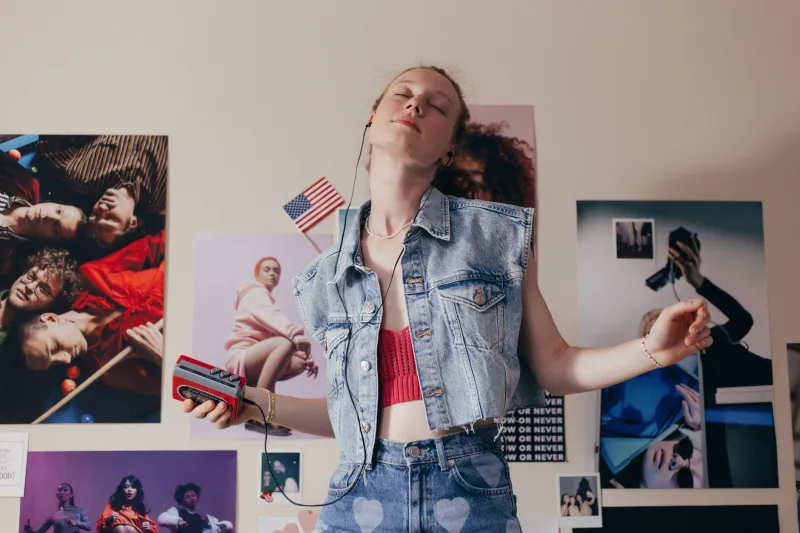
Somewhere in a subdivision outside Columbus, Ohio, a 15-year-old named Maya is doing her homework with Stray Kids blasting through her AirPods. Her mom, parked downstairs with a glass of wine and a vague memory of NSYNC, has absolutely no idea what her daughter is listening to — or why she cares so deeply about it. This scene, repeated in thousands of American homes every single night, is less of an anomaly and more of a cultural tipping point.
K-pop's grip on American teenagers didn't happen overnight. But somewhere between Psy's "Gangnam Style" going viral in 2012 and BTS selling out SoFi Stadium in Los Angeles a decade later, Korean pop music stopped being a quirky internet curiosity and started becoming the default playlist for a massive chunk of Gen Z. The numbers back it up: according to a 2023 Luminate Music report, K-pop consistently ranks among the most-streamed genres by listeners aged 13–24 in the United States. That's not a niche stat. That's a seismic shift.
What's Actually Playing in Teenagers' Earbuds
Ask any high school teacher in a major metro area and they'll tell you the same thing: K-pop references are everywhere. "I had a student do an entire English presentation on the lyrical structure of a BLACKPINK song," said one educator from a school district in the Dallas suburbs. "Three years ago, that would've been unusual. Now I barely blink."
The artists dominating teen conversations aren't just the obvious heavy hitters anymore. Sure, BTS and BLACKPINK are still household names — or at least household names in households with teenagers — but groups like ATEEZ, aespa, NewJeans, and TOMORROW X TOGETHER have developed genuine, passionate fanbases among American youth who discovered them not through traditional media, but through TikTok rabbit holes and YouTube recommendation algorithms.
That algorithmic discovery piece is crucial. American pop radio still exists, obviously, but it holds far less cultural authority over teenagers than it did even ten years ago. Streaming platforms don't care where a song was recorded or what language it's sung in. If a 13-year-old in Phoenix clicks on a NewJeans video and watches it three times in a row, the algorithm serves up more. Simple as that.
The Psychology of Stanning Something Different
Psychologists and music researchers have started paying closer attention to why K-pop specifically resonates so deeply with American teenagers, and the answers are more layered than "it's catchy" (though, to be fair, it absolutely is).
Part of the appeal is the sense of community. K-pop fandoms — ARMY for BTS, Blinks for BLACKPINK, Stays for Stray Kids — operate like deeply organized, emotionally invested social networks. For teenagers navigating the chaos of high school identity formation, finding a fandom can feel like finding a tribe. There's a shared language, shared rituals, shared emotional investment. That's powerful stuff at 16.
There's also something to be said for the deliberate, almost theatrical distance K-pop creates. These aren't artists you're going to randomly run into at a Whole Foods in Nashville. The parasocial relationship feels simultaneously intense and safe — fans can project enormous emotional energy onto their "bias" without the messy complications of proximity. American pop stars, by contrast, are overexposed. Their controversies, their feuds, their tabloid drama — it all chips away at the mystique. K-pop idols, especially when viewed through a language and cultural barrier, retain a certain untouchable quality that American teenagers apparently find irresistible.
Parents Are Confused, But Mostly Fine With It
The parental reaction to K-pop in American homes tends to fall into a few predictable categories. There are the genuinely curious parents who've started learning idol names and asking their kids to translate lyrics. There are the mildly bewildered ones who just nod along and pick their battles. And then there are the ones who've gone full convert themselves — yes, there are American moms in their 40s who are now full-blown BTS ARMY members, and no, they are not embarrassed about it.
What most parents seem to agree on, though, is that K-pop fandom hasn't been the disaster they might have feared. "Honestly, it got my daughter interested in learning Korean," said one parent from a suburb outside Chicago. "She's been studying it for two years now. I'll take it over TikTok drama any day."
That language learning angle keeps coming up in conversations with educators, too. Duolingo reported a massive spike in Korean language learners in the U.S. over the past five years, and the company has been pretty open about the fact that K-pop and K-drama fandoms are a significant driver of that interest. When a genre of music makes teenagers want to learn a foreign language just to understand it better, that's not just a music trend — that's a cultural force.
What This Means for the American Music Industry
Here's where things get genuinely interesting from an industry perspective. Major American record labels have been watching the K-pop explosion with a mix of admiration and anxiety. The traditional model — develop an artist, push them through radio, collect revenue — is being disrupted by an entirely different playbook. K-pop agencies invest heavily in artist development, visual identity, and fan engagement in ways that American labels are only beginning to experiment with.
The economics are telling. BTS merchandise sales alone have generated hundreds of millions of dollars annually. BLACKPINK's Coachella performances became some of the most-watched festival sets in the event's history. These aren't just music acts — they're full-scale entertainment brands, and American teenagers are buying in enthusiastically.
Some American artists and labels have started borrowing from the K-pop model, leaning into fandom culture, exclusive content drops, and highly produced visual aesthetics. Whether that's flattery or survival instinct probably depends on who you ask.
The Suburbs Are Already Fluent
Maya, back in Columbus, can tell you the full history of her favorite group's discography, explain the difference between a B-side and a title track, and describe in detail why a specific choreography sequence from a 2022 comeback stage was technically groundbreaking. She learned all of this not in a classroom, not from a parent, but from a global community of fans who are as passionate as she is.
That's the real story here. K-pop didn't just give American teenagers new music to listen to. It gave them a new way to engage with music entirely — deeper, more invested, more globally connected than anything Top 40 radio ever offered them.
The suburbs have already figured this out. The music industry is still catching up.