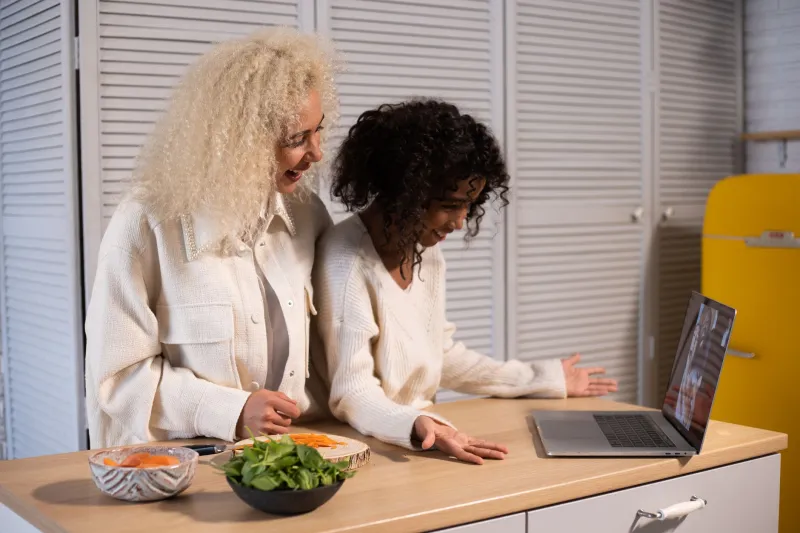
It started, as so many things do in the Kim household of suburban Columbus, Ohio, with a car ride. Fourteen-year-old Mia had plugged her phone into the aux cord, and before her mom Jennifer could protest, a BTS track was already filling the minivan. "I figured it was just a phase," Jennifer recalls. "But then I started humming it in the grocery store and I was like — okay, something is happening here."
Something is definitely happening. Across the United States, K-pop is no longer just a teenagers-only zone. Parents are getting pulled in, whether by proximity, curiosity, or sheer repetition. And what unfolds when the whole family ends up in the same fandom — or worse, in competing fandoms — is a story American households are still figuring out how to tell.
When Mom Becomes a Stan (Sort Of)
For a lot of families, the entry point is passive. A parent hears the same song enough times, catches a performance on YouTube over their kid's shoulder, or finds themselves accidentally watching a music video at 11 p.m. on a Tuesday. Before long, they've formed an opinion. And that opinion is not always welcome.
"My mom said she thought Jimin was 'the cute one,'" says 16-year-old Derek from Austin, Texas, with the exhausted tone of someone who has been through a lot. "And I was like, Mom, you can't just say that. There's a whole thing."
That "whole thing" is what makes K-pop fandom uniquely layered compared to, say, having a favorite classic rock band. The culture comes with its own vocabulary — biases, ults, comebacks, fan chants — and an unspoken social architecture that can feel overwhelming to outsiders. When a parent steps in without understanding the rules, it can create genuine friction.
But it can also create something unexpected: a conversation.
"I actually sat down with my daughter and had her explain the whole fandom structure to me," says Marcus, a 47-year-old dad from Atlanta whose 15-year-old introduced him to SEVENTEEN. "I didn't get all of it, but I got enough to understand why it mattered to her. That was kind of the point."
The Bias Wars Are Real — Even at the Dinner Table
Not every family story ends in bonding moments, though. Some of the most entertaining — and genuinely tense — dynamics emerge when family members develop different preferences within the same fandom.
Take the Rodriguez family in Miami. Mom Carmen became a casual fan of BLACKPINK after her daughter Sofia brought her to a YouTube concert stream during the pandemic. Things were fine until Carmen declared Rosé her favorite. Sofia, a devoted Jennie stan since 2018, did not take this well.
"She said I was wrong," Carmen laughs. "About a preference. I didn't know preferences could be wrong."
Sofia, for her part, is unapologetic. "It's not that she's wrong, it's just — Jennie is objectively the main character. Anyone who's been in the fandom longer than five minutes knows that."
This kind of debate might sound trivial from the outside, but it points to something real about how K-pop fandom functions as a social identity. For teenagers especially, the groups they stan and the members they bias are tied to how they see themselves. A parent casually adopting part of that identity — without the history, the emotional investment, or the years of following a group's journey — can feel like a shortcut that misses the whole point.
The Unexpected Benefits Nobody Talks About
Here's the thing, though: family K-pop crossover moments are producing some genuinely positive outcomes that don't always make it into the conversation.
Language learning is one of them. Several parents interviewed for this piece mentioned that their kids' K-pop obsessions had sparked a real interest in Korean — and in some cases, the whole family had started using apps like Duolingo together. "My son is teaching me Korean words he picked up from lyrics," says Linda from Seattle. "I'm terrible at it, but we're both laughing about it, which is something."
There's also the cultural curiosity factor. K-pop doesn't exist in a vacuum — it comes packaged with Korean food, language, history, and social norms. Parents who lean in rather than dismiss it often find themselves learning things about Korean culture they'd never otherwise encounter. Some families have started cooking Korean food together, watching K-dramas, or planning trips to Seoul that began entirely as a joke and gradually became a real goal.
"I thought K-pop was just music," admits Jennifer from Columbus. "Now I know about Korean skincare, I've watched two K-dramas, and I'm apparently going to Seoul in two years. My daughter did that to me."
Navigating the Gap Without Losing the Relationship
For families trying to figure out how to handle the generational divide, a few themes keep coming up in conversations with both teens and parents.
First: don't fake it. Teens can tell when a parent is performing interest rather than showing genuine curiosity, and it tends to backfire. You don't have to love K-pop to engage with it — asking honest questions is usually more appreciated than pretending to be a stan.
Second: respect the depth. K-pop fandom isn't casual for most of the teens living it. It's community, identity, and emotional investment wrapped into one. Treating it as a passing phase or a punchline tends to shut conversations down fast.
Third: let it be theirs first. Even if you end up genuinely enjoying a group, there's something to be said for letting your teenager remain the expert. That dynamic — where the kid gets to be the authority on something — can be quietly powerful for the relationship.
For Mia and Jennifer in Columbus, the K-pop experiment has had its messy moments. Jennifer once tried to join a fan Discord and was gently but firmly told by Mia that this was "a little too much." But they still share playlists. Jennifer still hums songs in grocery stores. And Mia, despite everything, seems okay with that.
"She's not a real stan," Mia says, smiling in a way that suggests she doesn't entirely mind. "But she tries. That counts for something."