One-Way Ticket to Seoul: Why K-Pop Fans Are Trading Vacations for a Whole New Life in Korea
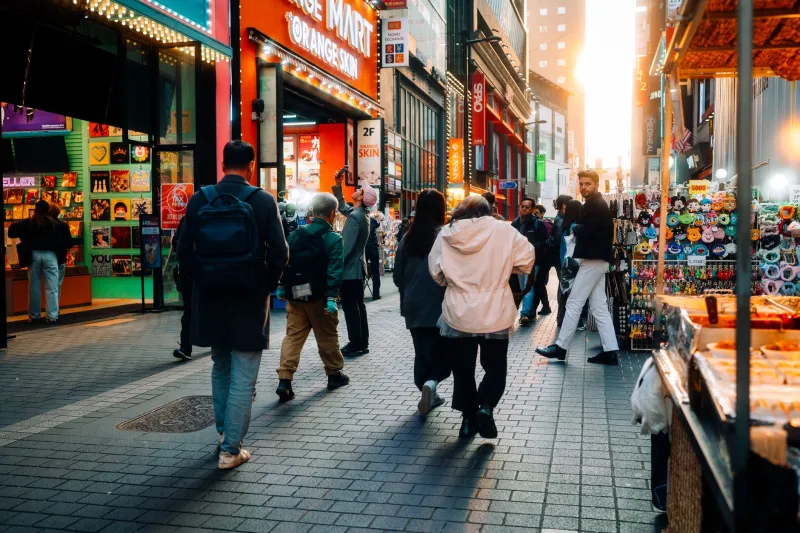
For years, the ultimate K-pop fan flex was the Seoul trip — two weeks of café-hopping in Hongdae, stalking music show recordings, and loading up on merch at SM Town. You posted the photos, your mutuals screamed, and then you flew home to your regular life. But something has shifted. A growing number of American fans aren't buying that return ticket anymore.
Call it the Seoul Relocation Wave. Driven by a cocktail of passion, practicality, and a genuine desire for cultural immersion, American K-pop fans in their 20s and 30s are turning what used to be a bucket-list vacation into a long-term lifestyle change. And the reasons go a lot deeper than just wanting to run into your bias at a convenience store.
More Than a Fan Moment — It's a Life Decision
Ask anyone who's made the move and they'll tell you the same thing: K-pop was the door, but Korea itself is what kept them there.
"I came for the music, honestly," says Maya, a 26-year-old from Atlanta who relocated to Seoul two years ago. "But once I was actually living here, I realized I loved the food culture, the public transit, the way the city moves. K-pop got me curious about Korea, but Korea made me want to stay."
This pattern is showing up across online communities like Reddit's r/Korea and various K-pop Discord servers. Fans who initially planned short-term stays — a semester abroad, a language school program, a working holiday — are quietly extending those timelines. Some are enrolling in Korean university programs. Others are landing remote work gigs that let them stay indefinitely. A smaller but notable group is actually building careers in the Korean entertainment industry itself, working as translators, content creators, social media managers, or even English-language tutors to K-pop trainees.
The proximity-to-idols factor is real, even if most people won't lead with it. Living in Seoul means you can realistically attend weekly music show recordings, hit up fan sign events, and be in the city when surprise pop-up concerts happen. For fans who've spent years watching fancams from across the Pacific, that kind of access feels life-changing.
The Visa Reality Check Nobody Warns You About
Here's where the dream gets complicated. South Korea's immigration system isn't exactly set up with "passionate K-pop fan who wants to vibe in Seoul" as a recognized visa category. Most Americans enter on a tourist exemption that allows 90 days, which sounds like a lot until it isn't.
For longer stays, the options are limited and often expensive. Student visas require enrollment in an accredited program. The E-2 teaching visa is popular but comes with strict requirements and can feel like a full-time commitment you didn't fully sign up for. The working holiday visa — which allows Americans aged 18-30 to live and work in Korea for up to a year — is one of the more accessible routes, but it fills up fast and isn't renewable.
Many fans find themselves in a frustrating loop: extending stays through language school enrollment, then scrambling to find work that qualifies for a proper visa, then considering whether to go home or dig deeper into the bureaucracy. Immigration attorneys who specialize in Korean visas have reportedly seen an uptick in American clients who describe themselves as "K-pop fans turned long-term residents" — a demographic that didn't really exist a decade ago.
Housing Costs and Culture Shock: The Parts Nobody Posts About
Seoul is not cheap. That's a sentence a lot of fans learn the hard way. The city consistently ranks among the most expensive in Asia, and the housing market operates in ways that are genuinely baffling to Americans. The jeonse system — where renters pay a large lump sum deposit instead of monthly rent — can require hundreds of thousands of dollars upfront. Monthly rent options (wolse) exist but are increasingly pricey in desirable neighborhoods like Mapo-gu or Yongsan.
Beyond the financial shock, there's the cultural adjustment that no amount of K-drama watching fully prepares you for. Korea's hierarchical social structure, the expectation of language proficiency in daily interactions, and the experience of being visibly foreign in a relatively homogeneous society all hit differently when you're not on vacation mode.
"I thought I knew Korean culture because I'd consumed so much of it," admits Jordan, a 29-year-old from Chicago who spent 14 months in Seoul before returning to the US. "But there's a difference between loving Korean pop culture and actually integrating into Korean society. It's humbling in ways I didn't expect."
Racism and xenophobia, while not universal, are reported experiences for many Black and brown American fans who relocate — a reality that often gets glossed over in the rosy "living my best life in Seoul" content that dominates social media.
How This Is Reshaping the K-Pop Fan Ecosystem
The ripple effects of this migration trend are showing up in interesting ways. American expat fan communities in Seoul have become their own micro-cultures — organizing meetups, sharing housing leads, pooling resources for concert tickets, and creating content that bridges the gap between Western fan culture and the Korean fandom ecosystem.
Some of these fans are becoming unexpected cultural ambassadors, helping Korean entertainment companies better understand their international audiences. Others are building small businesses — fan merchandise shops, translation services, K-pop tour guide operations — that serve both tourists and fellow long-term residents.
On the Korean side, the government and entertainment industry are paying attention. K-pop's global pull is increasingly recognized as an economic asset, and there's growing conversation about whether immigration pathways should better accommodate the wave of young foreigners who come for the culture and want to stay for the country.
Is It Worth It?
That depends entirely on who you ask. For some, relocating to Seoul is the best decision they've ever made — a genuine life upgrade that opened doors they never expected. For others, the gap between the fantasy and the reality is wide enough to send them back home with a complicated relationship with the country they once idealized.
What's clear is that K-pop has become something more than entertainment for this generation of American fans. It's become a compass — pointing people toward a language, a culture, and sometimes a whole new chapter of their lives. Whether that chapter is a long one depends less on passion and more on paperwork, savings accounts, and a willingness to be uncomfortable in the best possible way.
The Seoul pilgrimage has officially grown up. And for better or worse, it's not just a vacation anymore.