Statement Hair and Chunky Sneakers: The Idol Uniform Has Officially Left the Stage
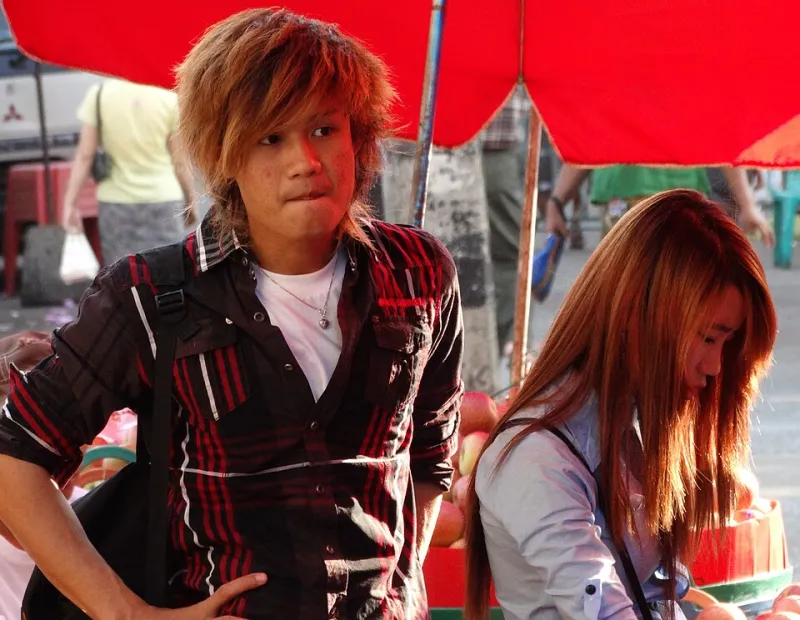
Photo: Adam Jones from Kelowna, BC, Canada, CC BY 2.0, via Wikimedia Commons
My neighbor's kid, age sixteen, recently dyed her hair a silver-lavender that would look right at home in a comeback trailer. Her mom thought it was a TikTok thing. It's not. It's a NewJeans thing. Or maybe a Stray Kids thing. Honestly, at this point, it's just a thing — and it's walking the halls of every American high school in the country.
K-pop stage fashion has stopped being something fans watch and started being something they wear. And I'd argue it's the most significant youth style shift since the emo era.
From Encore Stage to Homeroom
The signature look is unmistakable once you know it: oversized silhouettes mixed with one sharp statement piece, chunky platform sneakers, layered jewelry, hair colors that don't exist in nature, and that general sense that the outfit was curated rather than thrown on.
What's interesting is how it arrived. K-Drama fashion has long had a trickle-down effect — the soft romantic looks, the chaebol heir power suits — but stage fashion operates differently. It's louder, more experimental, more deliberately aspirational. And because idols change looks every comeback, there's a constant stream of new material for fans to absorb.
American teens aren't copying a single outfit. They're absorbing a whole design philosophy.
The Stylists Behind the Looks
I talked with a Los Angeles-based stylist who works with young performers, and she says the shift is dramatic. "Five years ago, clients brought me references from Instagram influencers. Now it's all music show stages and airport looks. The idol airport fit is the new red carpet for this generation."
She points out that idol styling is uniquely reproducible in a way Western celebrity fashion often isn't. "K-pop stage looks mix accessible pieces — a $40 cargo pant, a thrifted jacket — with one hero item. Teens can actually rebuild these outfits. You can't say that about a Met Gala look."
That accessibility is the whole trick. Idol fashion looks aspirational but is secretly achievable, which is exactly the formula teen style movements are built on.
The Thrift-Flip Economy
Enter the budget stylists. A whole community of thrift-flipper creators now specializes in recreating specific idol stage looks from secondhand finds — filming the transformation from a $12 Goodwill haul to a recognizable replica of a music show outfit.
The economics make sense for teenagers staring down $100+ concert tickets and album commitments. If the fandom experience is expensive, the fashion at least can be cheap. One creator I found recreates looks for under $30 an outfit, and her comment sections are full of teens tagging friends: "this is SO [bias name] coded."
That phrase — "coded" — tells you everything. The clothes aren't just clothes. They're a signal, a handshake, a way of saying I know.
Fandom or Fashion Movement?
So which is it? Here's my take: the distinction stopped mattering.
Every major youth fashion movement has had a subculture engine behind it — punk had its scenes, hip-hop had its blocks, grunge had Seattle. K-pop is simply the engine this time, and the fact that its origin is a music genre rather than a zip code changes nothing about how the fashion actually functions.
What's genuinely new is the speed and the global supply chain of influence. A hairstyle debuts on a Seoul stage Friday; by Monday there are salon tutorials for American teens; by the following weekend, Sally Beauty is sold out of the exact dye. There is no lag time anymore. Fashion movements used to take years to cross an ocean. This one crosses it in a scroll.
And unlike past trends that burned out when the subculture moved on, K-pop's fashion influence has a built-in refresh mechanism: the comeback cycle. There's always a new era, a new concept, a new look to chase. The trend can't die because it never stops regenerating.
The Hallway Runway
Will these kids look back at their silver hair and platform sneakers the way previous generations look back at their frosted tips? Probably. That's how youth fashion works — it's supposed to be a little embarrassing in retrospect.
But right now, in school hallways across America, K-pop stage fashion is doing what great fashion always does: giving kids a language to figure out who they are. The idols designed the look. The teens are the ones living in it.
And honestly? The encore stage has never looked so good.