After the Spotlight Fades: The Untold Struggles of Western Trainees Who Left K-Pop Behind
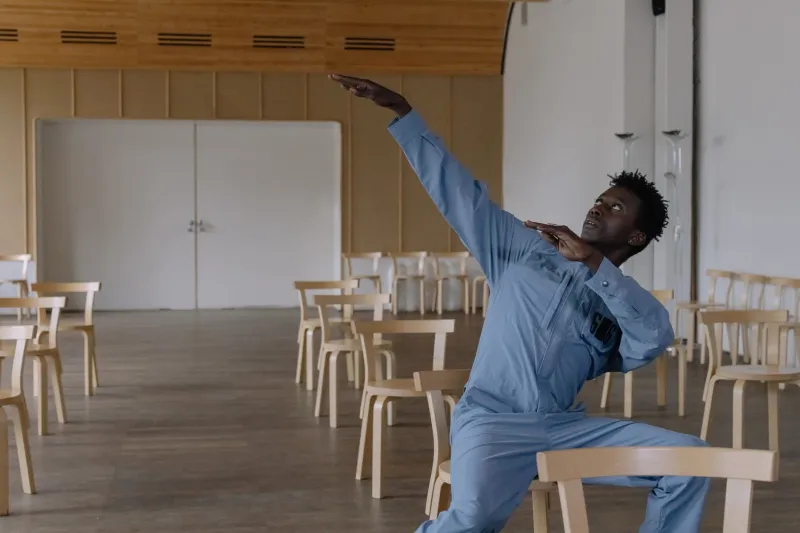
The K-pop trainee story has a very specific narrative arc when it goes well. You see it play out in reality shows like Produce 101, I-Land, and countless agency audition specials: the young hopeful from somewhere outside Korea — maybe Texas, maybe Toronto, maybe London — who gets discovered, survives the grueling trainee system, and debuts to a screaming fanbase. It's a compelling story. It makes for great television.
But for every trainee who makes it to debut, there are dozens who don't. And for the growing number of Americans and other Western hopefuls who spent months or years inside Korean entertainment companies before washing out, aging out, or walking away, the story that comes after is almost never told. It's not glamorous. It doesn't get a reality show. But it's real, and it's affecting more people than most K-pop fans realize.
The Pipeline That Brought Them There
Over the past decade, major Korean entertainment companies have dramatically expanded their international scouting operations. HYBE, SM Entertainment, JYP, and YG all run auditions in the United States — in cities like Los Angeles, New York, and Atlanta — specifically targeting young Americans with singing, dancing, or performance talent. The pitch is straightforward and intoxicating: come to Seoul, train with the best, and maybe become a global star.
Thousands of American teenagers and young adults have taken that leap. Some are Korean-American, drawn by both cultural connection and career ambition. Others are non-Korean fans who fell in love with K-pop and convinced themselves — sometimes correctly — that their talent was good enough to compete. A smaller number were discovered through social media, their covers or dance videos catching the eye of a scout.
What most of them weren't fully prepared for was what the trainee experience actually looks like up close.
The Reality Behind the Training Room Door
Former trainees who've spoken publicly — through YouTube videos, podcast interviews, and anonymous Reddit posts — describe a lifestyle that's equal parts boot camp and isolation experiment. Days begin early and end late. Vocal lessons, dance practice, language classes, and appearance evaluations fill every hour. Caloric intake is monitored. Social media is restricted or banned entirely. Contact with family back home is limited.
For American trainees specifically, the cultural and linguistic displacement adds another layer of difficulty. Navigating Korean social hierarchies, communicating in a language you're still learning, and being far from your support network creates a kind of loneliness that's hard to convey to people who haven't experienced it.
"You're so focused on just surviving each day that you don't have the bandwidth to process how you're actually feeling," one former trainee, who asked not to be named, shared in an online forum. "The homesickness hits you in waves, but you push it down because you don't want to look weak in front of the other trainees."
Mental health resources within these companies have historically been limited, and the culture around acknowledging psychological struggles — in Korea broadly and in the entertainment industry specifically — has not always been conducive to asking for help. That's been slowly changing, but former trainees say the shift hasn't come fast enough.
When the Dream Ends
Trainee contracts get terminated for all kinds of reasons. Some trainees are cut because they plateau in their skill development. Others leave voluntarily — burned out, homesick, or simply unwilling to continue under conditions they find unsustainable. Some age out of the system, which tends to favor debuts in the late teens and early 20s. A few make it to the pre-debut stage only to have their group concept shelved entirely.
However it ends, the aftermath is often a shock to the system. Coming back to the United States after one, two, or three years in Seoul means re-entering a life that moved on without you. Friends graduated college. Careers started. Social circles shifted. And the returnee is left holding a very specific set of skills — Korean language proficiency, performance training, industry knowledge — that don't map neatly onto most American job applications.
Financially, the picture can be bleak. Many trainee contracts include clauses requiring trainees to repay training costs if they leave before debuting or before a certain contract term is met. The specifics vary by company and contract, but the concept of debut debt — owing money back to the agency that trained you — is a real and documented phenomenon. For a 22-year-old returning home with no degree, no savings, and a potential repayment obligation, the financial stress is significant.
The Mental Health Hangover
Psychologists who work with performers and athletes describe something called "identity foreclosure" — a situation where a person has built their entire sense of self around a single goal or role, and then that goal disappears. Former K-pop trainees are particularly vulnerable to this. Many of them gave up conventional education timelines, social development milestones, and alternative career paths in pursuit of a dream that didn't pan out.
Depression, anxiety, and a profound sense of purposelessness are commonly reported in the immediate post-trainee period. Some former trainees describe difficulty explaining their experience to people back home — either because it sounds too exotic to be relatable, or because the stigma of "failing" to debut makes it hard to talk about openly.
Support systems are thin. There's no official alumni network for former K-pop trainees. No industry-funded counseling program. No structured transition pathway. A few online communities have sprung up organically, offering peer support and shared resources, but the infrastructure is still nascent.
Finding a Path Forward
Not every story ends in struggle. Some former trainees have successfully pivoted their experience into new creative careers — as independent musicians, dance instructors, content creators, or Korean-English interpreters. A handful have found work within the K-pop industry in non-performance roles, leveraging their insider knowledge in ways that don't require them to be on stage.
But these success stories tend to be the exceptions, and they often require a combination of luck, connections, and the kind of resilience that not everyone can sustain after years of an already grueling experience.
What's missing is systemic support — from the companies that recruited these young people, from the broader entertainment industry, and from the K-pop fan community that benefits from their stories without always acknowledging the cost.
The next time a reality show features a foreign trainee getting cut, or a fandom speculates about why a non-Korean member quietly left a group, it's worth pausing on that moment. Behind the edited footage and the PR statements, there's a real person figuring out what comes next. And that story deserves as much attention as the debut announcement that never came.